FIFA World Cup 2026: Complete Match Schedule, Fixtures & Venue Guide
The wait is almost over. On June 11, 2026, Mexico kicks off the biggest World Cup in history at the legendary Estadio Azteca—and you need to be ready. This tournament isn’t just massive in scale; it’s a once-in-a-lifetime event spreading across 16 incredible cities in the USA, Canada, and Mexico. We’re talking 48 nations, 104 nail-biting matches, and a final showdown at MetLife Stadium on July 19 that’ll crown the world champion.
But here’s the thing tickets are selling out fast. Phase 3 of the lottery opens December 11, and if you’re serious about being there, you can’t afford to wait. Whether you’re hunting for the complete match schedule, figuring out which stadiums to hit, or just trying to lock down affordable tickets (yes, they start at $82), you’ve landed in the right place. We’ve got everything: qualified teams, group stage breakdowns, travel tips, and live updates as the draw happens December 5. No fluff, no outdated info just everything you actually need to plan your World Cup adventure.
FIFA World Cup 2026™
11 June – 19 July 2026
Quick Tournament Facts
| Detail | Information |
|---|---|
| Tournament Dates | June 11 – July 19, 2026 |
| Duration | 39 days |
| Total Teams | 48 (expanded from 32) |
| Total Matches | 104 (up from 64) |
| Host Nations | USA, Canada, Mexico |
| Venues | 16 stadiums across 16 cities |
| Opening Match | June 11 at Estadio Azteca, Mexico City |
| Final Match | July 19 at MetLife Stadium, New Jersey |
The tournament kicks off on June 11, 2026, and runs through July 19, spanning 39 action-packed days. With automatic qualification for the three host nations and groundbreaking changes to the competition structure, the stage is set for unforgettable drama, stunning upsets, and moments that will be talked about for generations.
Understanding the Historic Three-Nation Partnership
The collaboration between the United States, Canada, and Mexico represents more than just shared hosting duties. This partnership symbolizes unity across borders and cultures, bringing together three distinct football traditions under one banner.
Host Nation Breakdown
United States
- Hosts the lion’s share of matches (78 total)
- All quarterfinals, semifinals, and final in US venues
- Growing football passion with massive stadiums
- Previously hosted 1994 World Cup
Mexico
- Hosting World Cup for third time (1970, 1986, 2026)
- Deep football roots and unmatched atmosphere
- Opening match at iconic Estadio Azteca
- 13 matches total
Canada
- First-time World Cup host
- Northern charm meets expanding football enthusiasm
- Opening match at BMO Field, Toronto
- 13 matches total
Opening Match Schedule
| Date | Host Nation | Venue | City | Match Type | Important Notes |
|---|---|---|---|---|---|
| June 11 | Mexico | Estadio Azteca | Mexico City | Opening Match | Mexico vs South Africa (Group A) |
| June 11 | Mexico | Estadio Guadalajara | Guadalajara | Group Stage Match | Korea Republic vs Czechia/Denmark/North Macedonia/Republic of Ireland (Group A) |
| June 12 | Canada | BMO Field | Toronto | Group Stage Match | Canada vs Bosnia & Herzegovina/Italy/N. Ireland/Wales (Group B) |
| June 12 | United States | SoFi Stadium | Los Angeles | Group Stage Match | USA vs Paraguay (Group D) |
This staggered opening ensures each host country gets its moment in the spotlight while maximizing global viewership across different time zones.
Regional Venue Clusters
The geographical spread creates natural regional clusters that minimize travel fatigue:
Western Region
- Vancouver
- Seattle
- San Francisco Bay Area
- Los Angeles
Central Region
- Guadalajara
- Mexico City
- Monterrey
- Houston
- Dallas
- Kansas City
Eastern Region
- Atlanta
- Miami
- Toronto
- Boston
- Philadelphia
- New York/New Jersey
This organization allows supporters to plan multi-match trips within reasonable distances while experiencing the diverse landscapes and cultures of North America.
Tournament Structure and Revolutionary Format Changes
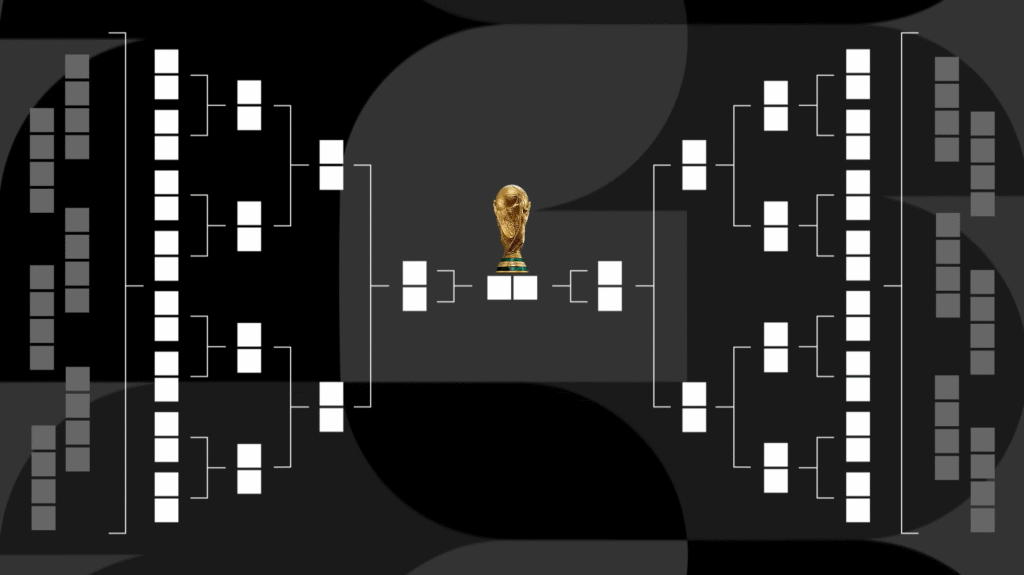
The expansion to 48 teams marks the biggest structural change in World Cup history since 1998. Gone is the familiar 32-team format; welcome to an era of increased global representation and more competitive football.
New Format Breakdown
| Stage | Number of Teams | How Teams Advance | Notes |
|---|---|---|---|
| Group Stage | 48 teams in 12 groups | Top 2 from each group + 8 best third-place teams | Determines Round of 32 entrants |
| Round of 32 | 32 teams | Winners advance | Knockout stage begins |
| Round of 16 | 16 teams | Winners advance | Knockout stage continues |
| Quarterfinals | 8 teams | Winners advance | Knockout stage |
| Semifinals | 4 teams | Winners to final, losers to third-place match | Determines finalists and 3rd place |
| Final | 2 teams | Champion crowned | Tournament winner |
Key Format Features
Group Stage Structure
- 12 groups of 4 teams each
- Format chosen to avoid collusion issues from earlier 3-team proposals
- Top 2 teams from each group advance automatically
- 8 best third-placed teams also progress
What’s New
- Introduction of Round of 32 (completely new stage)
- Teams reaching final play 8 matches instead of 7
- Increased focus on squad depth and endurance
- More opportunities for underdog stories
Complete Tournament Timeline
| Stage | Dates | Where / Notes |
|---|---|---|
| Group Stage | June 11–27 | Matches in all 16 host cities |
| Round of 32 | June 28 – July 3 | First knockout round, 32 teams |
| Round of 16 | July 4–7 | Winners of Round of 32 compete |
| Quarterfinals | July 9–11 | Top 8 teams battle |
| Semifinals | July 14–15 | Matches hosted in Dallas & Atlanta |
| Third Place | July 18 | Miami (Hard Rock Stadium) |
| Final | July 19 | New Jersey (MetLife Stadium) |
Match Progression Details
The group stage runs from June 11 through June 27, with match days carefully scheduled to ensure every team gets proper rest between games. Each team plays three group matches with equal recovery time. The newly introduced Round of 32 takes place from June 28 to July 3, creating an extra knockout stage that increases competitive intensity. This is followed by the Round of 16 from July 4 to 7.
Quarterfinals happen July 9 through 11, with semifinals on July 14 and 15. The third-place playoff takes place on July 18 at Hard Rock Stadium in Miami, leading up to the grand finale on July 19 at MetLife Stadium in East Rutherford, New Jersey. This structure ensures proper rest periods between knockout rounds while maintaining the tournament’s intensity and drama throughout its 39-day span.
FIFA World Cup 2026 Complete Match Schedule
Group Stage Fixtures
Opening Matches (June 11-12, 2026)
| Date | Match | Group | Venue | City | Teams |
|---|---|---|---|---|---|
| June 11 | 1 | A | Estadio Azteca | Mexico City | Mexico vs South Africa |
| June 11 | 2 | A | Estadio Akron | Guadalajara | Korea Republic vs Czechia/Denmark/N. Macedonia/Republic of Ireland |
| June 12 | 3 | B | BMO Field | Toronto | Canada vs Bosnia & Herzegovina/Italy/N. Ireland/Wales |
| June 12 | 4 | D | SoFi Stadium | Los Angeles | USA vs Paraguay |
Group Stage Schedule Overview
| Matchday | Date Range | Groups Playing |
|---|---|---|
| Matchday 1 | June 11–17 | All Groups A through L |
| Matchday 2 | June 18–23 | All Groups A through L |
| Matchday 3 | June 24–27 | All Groups A through L |
Click here to get All Matches Schedule of FIFA 26
Knockout Stage Schedule
Round of 32 (June 28 – July 3, 2026)
| Date | Match | Fixture | Venue |
|---|---|---|---|
| June 28 | 73 | Group A Runner-up vs Group B Runner-up | Los Angeles |
| June 29 | 74 | Group E Winner vs 3rd Place Team | Boston |
| June 29 | 75 | Group F Winner vs Group C Runner-up | Monterrey |
| June 29 | 76 | Group C Winner vs Group F Runner-up | Houston |
| June 30 | 77 | Group I Winner vs 3rd Place Team | New York/New Jersey |
| June 30 | 78 | Group E Runner-up vs Group I Runner-up | Dallas |
| June 30 | 79 | Group A Winner vs 3rd Place Team | Mexico City |
| July 1 | 80 | Group L Winner vs 3rd Place Team | Atlanta |
| July 1 | 81 | Group D Winner vs 3rd Place Team | San Francisco Bay Area |
| July 1 | 82 | Group G Winner vs 3rd Place Team | Seattle |
| July 2 | 83 | Group K Runner-up vs Group L Runner-up | Toronto |
| July 2 | 84 | Group H Winner vs Group J Runner-up | Los Angeles |
| July 2 | 85 | Group B Winner vs 3rd Place Team | Vancouver |
| July 3 | 86 | Group J Winner vs Group H Runner-up | Miami |
| July 3 | 87 | Group K Winner vs 3rd Place Team | Kansas City |
| July 3 | 88 | Group D Runner-up vs Group G Runner-up | Dallas |
Round of 16 (July 4-7, 2026)
| Date | Match | Fixture | Venue |
|---|---|---|---|
| July 4 | 89 | Winner 74 vs Winner 77 | Philadelphia |
| July 4 | 90 | Winner 73 vs Winner 75 | Houston |
| July 5 | 91 | Winner 76 vs Winner 78 | New York/New Jersey |
| July 5 | 92 | Winner 79 vs Winner 80 | Mexico City |
| July 6 | 93 | Winner 83 vs Winner 84 | Dallas |
| July 6 | 94 | Winner 81 vs Winner 82 | Seattle |
| July 7 | 95 | Winner 86 vs Winner 88 | Atlanta |
| July 7 | 96 | Winner 85 vs Winner 87 | Vancouver |
Quarter-Finals (July 9-11, 2026)
| Date | Match | Fixture | Venue |
|---|---|---|---|
| July 9 | 97 | Winner 89 vs Winner 90 | Boston |
| July 10 | 98 | Winner 93 vs Winner 94 | Los Angeles |
| July 11 | 99 | Winner 91 vs Winner 92 | Miami |
| July 11 | 100 | Winner 95 vs Winner 96 | Kansas City |
Semi-Finals (July 14-15, 2026)
| Date | Match | Fixture | Venue |
|---|---|---|---|
| July 14 | 101 | Winner 97 vs Winner 98 | Dallas |
| July 15 | 102 | Winner 99 vs Winner 100 | Atlanta |
Finals (July 18-19, 2026)
| Date | Match | Fixture | Venue |
|---|---|---|---|
| July 18 | 103 | Third Place Playoff | Miami |
| July 19 | 104 | FINAL | New York/New Jersey |
Key Tournament Dates
- Tournament Duration: 39 days
- Total Matches: 104
- Rest Days: Strategic breaks between knockout rounds
- Final Match Day: July 19, 2026 at MetLife Stadium
Regional Distribution
Western Region
Vancouver, Seattle, San Francisco Bay Area, Los Angeles
Central Region
Guadalajara, Mexico City, Monterrey, Houston, Dallas, Kansas City
Eastern Region
Atlanta, Miami, Toronto, Boston, Philadelphia, New York/New Jersey
The table above provides a clear roadmap of the entire tournament, from the opening whistle in Mexico City to the championship celebration in New Jersey. Notice how the schedule balances competitive integrity with practical considerations like travel time and stadium availability.
Qualified Teams and What to Expect
As of now, 42 nations have secured their spots in the tournament, with six more to be determined through playoff matches in March 2026. The qualified teams represent a fascinating blend of traditional powerhouses, emerging forces, and historic debutants.
Argentina arrives as defending champion, having claimed their third World Cup title in Qatar 2022. Brazil and Germany bring their usual championship pedigree, while European giants like France, Spain, England, and Portugal promise tactical sophistication and star power. Asian football continues its upward trajectory with strong representatives including Japan, South Korea, Iran, and Australia.
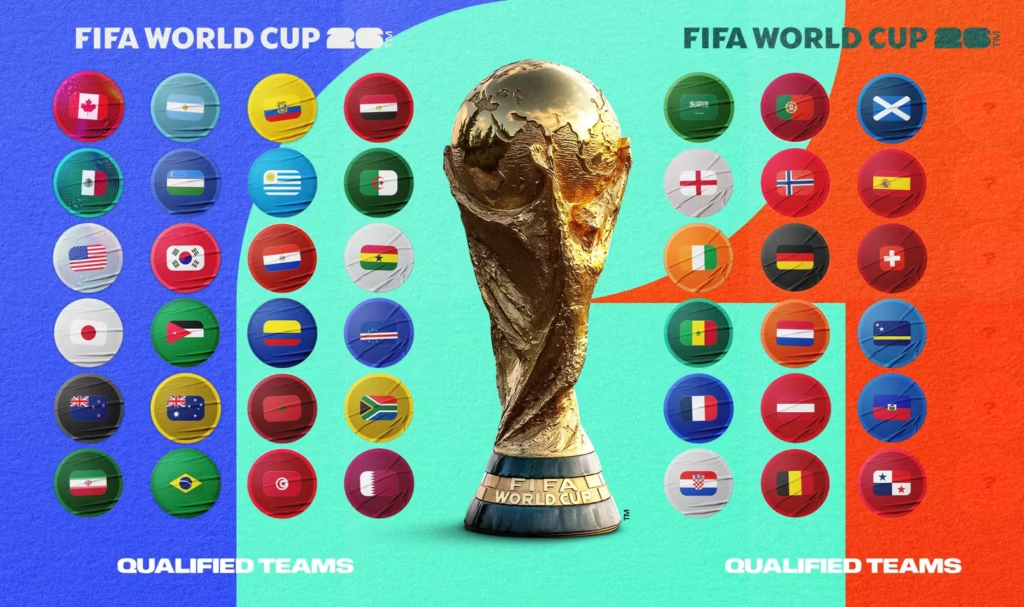
The tournament will witness several remarkable debuts. Cape Verde, Curaçao, Jordan, and Uzbekistan will all experience World Cup football for the first time, bringing fresh energy and unpredictable dynamics to the competition. Curaçao holds a special distinction as the smallest country by area and population ever to qualify, creating a David versus Goliath narrative that football fans adore.
Some teams return after long absences. Haiti makes its comeback after 52 years, last appearing in 1974. Austria, Norway, and Scotland return after missing since 1998, while Paraguay and South Africa rejoin after 2010 absences. These returns add layers of redemption stories and renewed ambition to the tournament narrative.
FIFA World Cup 2026 Qualified Teams
Complete List by Confederation
CONCACAF (6 Teams)
North America, Central America, and Caribbean
| Team | Status | Last Appearance | Notable Achievement |
|---|---|---|---|
| Canada | Host Nation | Never (as independent host) | Co-hosting debut |
| Mexico | Host Nation | 2022 | Third time hosting/co-hosting |
| United States | Host Nation | 2022 | Hosted 1994 World Cup |
| Curaçao | Qualified | DEBUT | Smallest nation ever to qualify |
| Haiti | Qualified | 1974 | 52-year return |
| Panama | Qualified | 2018 | Second appearance |
UEFA (12 Teams)
Europe
| Team | Last Appearance | World Cup Titles |
|---|---|---|
| Austria | 1998 | 0 |
| Belgium | 2022 | 0 |
| Croatia | 2022 | 0 (Runner-up 2018) |
| England | 2022 | 1 (1966) |
| France | 2022 | 2 (1998, 2018) |
| Germany | 2022 | 4 (1954, 1974, 1990, 2014) |
| Netherlands | 2022 | 0 (Runner-up 3 times) |
| Norway | 1998 | 0 |
| Portugal | 2022 | 0 |
| Scotland | 1998 | 0 |
| Spain | 2022 | 1 (2010) |
| Switzerland | 2022 | 0 |
CONMEBOL (6 Teams)
South America
| Team | Last Appearance | World Cup Titles |
|---|---|---|
| Argentina | 2022 | 3 (1978, 1986, 2022) ⭐ |
| Brazil | 2022 | 5 (Most titles) |
| Colombia | 2018 | 0 |
| Ecuador | 2022 | 0 |
| Paraguay | 2010 | 0 |
| Uruguay | 2022 | 2 (1930, 1950) |
AFC (8 Teams)
Asia
| Team | Status | Last Appearance |
|---|---|---|
| Australia | Qualified | 2022 |
| Iran | Qualified | 2022 |
| Japan | Qualified | 2022 |
| Jordan | DEBUT | First appearance |
| Qatar | Qualified | 2022 (Host nation) |
| Saudi Arabia | Qualified | 2022 |
| South Korea | Qualified | 2022 |
| Uzbekistan | DEBUT | First appearance |
CAF (9 Teams)
Africa
| Team | Last Appearance | Notable Info |
|---|---|---|
| Algeria | 2014 | Return after 12 years |
| Cape Verde | DEBUT | First appearance |
| Egypt | 2018 | Return journey |
| Ghana | 2022 | Fourth appearance |
| Ivory Coast | 2014 | Return after 12 years |
| Morocco | 2022 | Semi-finalist 2022 |
| Senegal | 2022 | Current African champion |
| South Africa | 2010 | Return after 16 years |
| Tunisia | 2022 | Seventh appearance |
OFC (1 Team)
Oceania
| Team | Last Appearance | Milestone |
|---|---|---|
| New Zealand | 2010 | First guaranteed OFC spot |
Tournament Records
- Total Teams: 48 (expanded from 32)
- Teams Qualified: 42 (as of November 2025)
- Remaining Spots: 6 (via playoffs in March 2026)
- Debut Nations: 4 (Cape Verde, Curaçao, Jordan, Uzbekistan)
- Longest Absence: Haiti (52 years since 1974)
- Most Arab Nations: 7 nations qualifying together (first time)
Historical Milestones
First-Time Qualifiers
These nations will experience World Cup football for the very first time:
- Cape Verde (Africa)
- Curaçao (Caribbean) – Smallest nation by population
- Jordan (Asia)
- Uzbekistan (Asia) – Former Soviet republic
Notable Returns
- Haiti: Last appeared in 1974 (52 years)
- Austria, Norway, Scotland: Last appeared in 1998 (28 years)
- Paraguay, South Africa: Last appeared in 2010 (16 years)
- Algeria, Ivory Coast: Last appeared in 2014 (12 years)
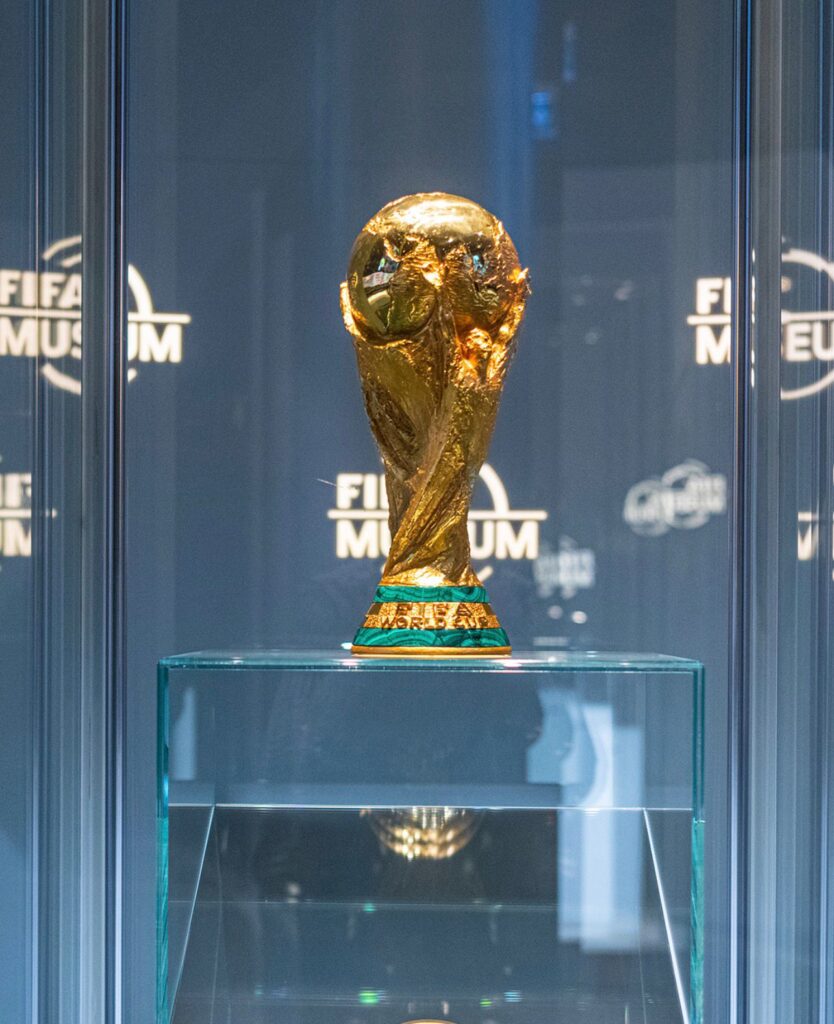
Playoff matches in March 2026 will determine the final six teams competing in the tournament.
Exploring the 16 Magnificent Venues
The stadiums selected for this World Cup represent architectural marvels and engineering excellence. Each venue brings unique characteristics, from retractable roofs and climate control systems to grass field conversions and capacity expansions specifically designed for this tournament.
Spotlight on Key Stadiums
MetLife Stadium (New Jersey)
- Hosts the final match on July 19
- Capacity: 82,500
- Location near New York City provides global stage
- Tournament’s climactic centerpiece
AT&T Stadium (Texas)
- Hosts most matches: 9 total games
- Indoor facility with retractable roof
- Capacity expands beyond 80,000
- Serves as tournament hub throughout competition
Estadio Azteca (Mexico City)
- Only stadium used in three World Cups (1970, 1986, 2026)
- Tournament’s largest venue: 87,523 capacity
- Hosts opening match on June 11
- Deep historical significance
Complete Venue Guide
| Venue | City | Capacity | Special Features |
|---|---|---|---|
| Estadio Azteca | Mexico City | 87,523 | Historic venue, opens tournament |
| MetLife Stadium | New York/New Jersey | 82,500 | Final match host |
| AT&T Stadium | Dallas | 80,000+ | 9 matches, retractable roof |
| Arrowhead Stadium | Kansas City | 76,416 | Passionate football atmosphere |
| NRG Stadium | Houston | 72,220 | Retractable roof, climate control |
| Mercedes-Benz Stadium | Atlanta | 71,000 | Modern design, retractable roof |
| SoFi Stadium | Los Angeles | 70,240 | USA opening match venue |
| Lumen Field | Seattle | 68,740 | Renowned crowd noise |
| Levi’s Stadium | San Francisco | 68,500 | Silicon Valley location |
| Lincoln Financial Field | Philadelphia | 67,594 | Historic sports city |
| Hard Rock Stadium | Miami | 64,767 | Third-place playoff host |
| Gillette Stadium | Boston | 64,628 | New England heritage |
| BC Place | Vancouver | 54,500 | Retractable roof, Canada host |
| Estadio BBVA | Monterrey | 53,500 | Modern Mexican venue |
| Estadio Akron | Guadalajara | 49,813 | Passionate Mexican fanbase |
| BMO Field | Toronto | 45,736 | Expanded for tournament |
Stadium Modifications and Upgrades
Grass Installation Program
- Eight stadiums converting from artificial turf to natural grass
- University of Tennessee and Michigan State research team supervising
- Ensures optimal playing conditions for all matches
- Temporary installation for tournament duration
Capacity Expansions
- BMO Field: Expanded from 30,000 to 45,736 specifically for tournament
- Multiple venues can expand beyond listed capacities for special matches
- Modifications meet strict FIFA standards
Climate Control Features Four venues with retractable roofs and climate control:
- Mercedes-Benz Stadium (Atlanta)
- AT&T Stadium (Dallas)
- NRG Stadium (Houston)
- BC Place (Vancouver)
These address potential heat concerns during North American summer, providing comfortable conditions regardless of external weather.
Tournament Draw and Group Formation
The tournament draw takes place on December 5, 2025, at Washington D.C.’s Kennedy Center. This event will determine group compositions and set the stage for months of anticipation and tactical analysis.
Draw Process Explained
| Element | Details |
|---|---|
| Date & Location | December 5, 2025 at Kennedy Center, Washington D.C. |
| Number of Pots | 4 pots of 12 teams each |
| Seeding Basis | November 2025 FIFA world rankings |
| Pot 1 Teams | 3 host nations + 9 highest-ranked teams |
| Special Rules | UEFA can have 2 teams per group; others limited to 1 |
How Teams Are Divided
Pot 1 Composition
- Three host nations (USA, Canada, Mexico)
- Nine highest-ranked qualified teams (excluding hosts)
- Ensures top teams spread across different groups
- Creates theoretically balanced competition
Pots 2, 3, and 4
- Remaining 36 teams divided by FIFA rankings
- Distributed to maintain competitive balance
- Each group gets one team from each pot
Unique Draw Circumstances
Playoff Placeholder Teams The draw happens before playoff matches conclude in March 2026. This means:
- Six team positions will be placeholders
- Labeled as “playoff winners” until matches determine qualifiers
- Assigned to predetermined pots based on FIFA seeding methodology
- Final assignments completed after March 2026 playoffs
Confederation Rules
- No two teams from same confederation in one group (except UEFA)
- UEFA exception: Can have up to 2 teams per group (12 total qualifiers)
- Maintains competitive balance while accommodating Europe’s large contingent
Pre-Assigned Host Nation Groups
| Host Nation | Group | Opening Match Date | Venue |
|---|---|---|---|
| Mexico | Group A | June 11 | Estadio Azteca, Mexico City |
| Canada | Group B | June 12 | BMO Field, Toronto |
| United States | Group D | June 12 | SoFi Stadium, Los Angeles |
This arrangement ensures each host nation plays its group stage matches within its own country, maximizing home support and minimizing travel during the opening phase.
Ticket Information and Fan Experience
FIFA introduced dynamic pricing for World Cup tickets for the first time, following the model used in the 2025 FIFA Club World Cup. Prices fluctuate based on demand for specific matches, meaning high-profile games command premium prices while less anticipated matchups remain more affordable.
Ticket Pricing Structure
| Match Type | Starting Price | Premium Price |
|---|---|---|
| Group Stage | $60 | Varies by demand |
| Round of 32 | Higher than group | Dynamic pricing |
| Round of 16 | Increased rates | Dynamic pricing |
| Quarterfinals | Premium rates | Dynamic pricing |
| Semifinals | High-tier pricing | Dynamic pricing |
| Final | $6,730+ | Premium dynamic |
These represent significant increases from the 2022 Qatar World Cup (approximately $69 to $1,607), but dynamic pricing means figures serve as starting points rather than fixed costs.
Ticket Sales Timeline
| Phase | Dates | Eligibility |
|---|---|---|
| Phase 1 | Sept 10–19, 2025 | Visa cardholders only |
| Phase 2 | Oct 27–31, 2025 | Expanded access |
| Phase 3 | After Dec 5, 2025 | Post-draw sales for specific matches |
| Ongoing Sales | Through tournament | Subject to availability |
Purchase Limits and Rules
Individual Limits
- Maximum 4 tickets per person per match
- Maximum 40 tickets across entire tournament
- Prevents scalping and ensures broader access
Official Resale Platform
- FIFA launching legitimate secondary market
- Protects buyers from fraudulent sellers
- Safe alternative to unofficial resellers
- Transfers managed through official channels
FIFA Fan Festivals
Free public viewing areas create community gathering spaces for fans without tickets:
| City | Location | Features |
|---|---|---|
| Jersey City | Liberty State Park | Giant screens, live entertainment |
| Philadelphia | Fairmount Park | Public viewing, fan activities |
| Toronto | Fort York & The Bentway | Dual locations, cultural events |
| Houston | East Downtown | Community celebration space |
These festivals extend the tournament experience beyond stadium walls, creating accessible celebration zones throughout host cities.
Tournament Symbols and Cultural Identity
Official Mascots
The three mascots embody each host nation’s identity:
| Mascot | Animal | Represents | Symbolism |
|---|---|---|---|
| Maple | Moose | Canada | Northern wilderness, strength |
| Zayu | Jaguar | Mexico | Ancient heritage, power |
| Clutch | Bald Eagle | United States | Freedom, national pride |
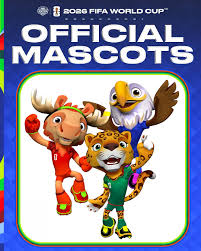
These characters serve as ambassadors, particularly connecting with younger fans and families throughout the tournament.
Official Match Ball: Adidas Trionda
Special Features
- Maple leaf for Canada
- Golden eagle for Mexico
- Five-pointed star for United States
- Gold embellishments representing World Cup Trophy
Tournament Emblem
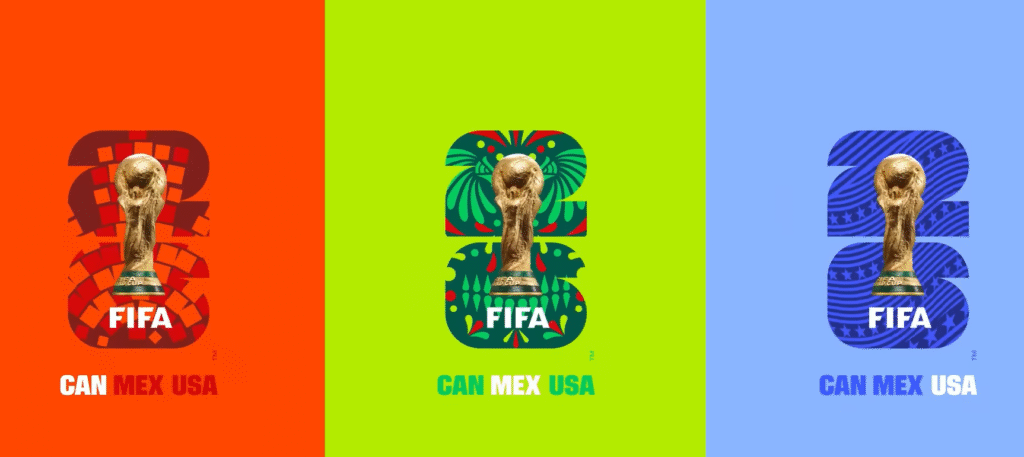
Unveiled at Los Angeles’s Griffith Observatory in May 2023:
- Features stacked “26” design
- Photographic image of World Cup Trophy (first time in emblem history)
- Departure from traditional stylized representations
- Mixed reception: criticized as unfinished, defended as beautiful
- Each host city received customized variants reflecting local landmarks

Official Music
Main Theme Song
- Instrumental track: “FIFA World Cup 26 Theme Song”
- Released May 17, 2023
City-Specific Remixes (March 2025) 16 artists from host cities created localized versions:
- Atlanta: Dallas Austin
- Boston: Ben Zakharenko, Dayvin, Berklee College of Music
- Dallas: Tre Nagella
- Philadelphia: DJ Jazzy Jeff
- And 12 more unique interpretations
Creates musical tapestry celebrating North American diversity.
Broadcasting and Global Coverage
Television and streaming coverage will bring the tournament to billions of viewers worldwide.
Broadcasting Rights by Region
| Region | English Rights | Spanish Rights | Notes |
|---|---|---|---|
| United States | Fox | NBCUniversal | Renewed Feb 2015 |
| Canada | Bell Media | Bell Media | Full coverage |
| Puerto Rico | — | Futbol de Primeira (radio) | Audio coverage |
International Broadcast Center
Location: Kay Bailey Hutchison Convention Center, Dallas
Functions:
- Technical hub coordinating global feeds
- Central tournament location advantages
- Serves broadcasters worldwide
- Manages production logistics
Why These Contracts Matter
Contracts renewed in February 2015 without competitive bidding, reportedly as compensation for 2022 World Cup’s winter scheduling that created conflicts with major professional sports leagues’ regular seasons.